Private Civil Engineering and Architecture Tutor Online with AI
Private Civil Engineering and Architecture lessons with an AI teacher: your child talks with the teacher out loud, and the teacher explains and draws on a shared board, step by step, following what they're learning in class.
Teacher: Noa
- Course updated 11/2026
- Hebrew, and 5 more languages
- 1 level: High School (Grades 10–12)
- 24 lessons · about 14 hours of lessons
Civil Engineering and Architecture
Private Civil Engineering and Architecture lessons with an AI teacher: your child talks with the teacher out loud, and the teacher explains and draws on a shared board, step by step, following what they're learning in class.
24 lessons · 4 modules · Live private lesson with the teacher on the board
What you'll learn
- Introduction, Binding Materials and Interior Finishes
- Concrete, Steel, Openings, Light Roofs and Stairs II
- Protected Space, Structural Frame and Roof Envelope
- Specialization and Exam Technique
Related topics
What's included
- Live 1:1 lessons with an AI tutor on a shared board
- 14 hours of live one-on-one lessons
- 24 lessons on a shared board, each with a clear goal
- Practice and a understanding check in every lesson
- A summary after every lesson, saved in the history
- A completion certificate for each level
- Computer, tablet or phone
- Hebrew, plus 5 more languages
Course plan
1 level · 4 modules · 24 lessons · 13 hr 30 min total
בגרות 5 יח"לBuilding Technologies – Bagrut 5 Units4 modules • 24 lessons • 13 hr 30 min
Mapped to exam: בגרות 5 יח"ל הנדסת בנייה ואדריכלות – שאלון 827381 (70%)
Introduction, Binding Materials and Interior Finishes8 lessons • 4 hr 25 min
- 1The Building, Its Components and LoadsTrial lessonabout 35 min
- 2Building Methods and the Planning Systemabout 35 min
- 3Binding Materials: Cement, Lime, Gypsum, Mortarabout 35 min
- 4Walls and Partitions: Blocks and Bondingabout 35 min
- 5Plastering: Layers, Types and Defectsabout 30 min
- 6Flooring and Claddingabout 30 min
- 7Gypsum Board Partitionsabout 30 min
- 8Stairs I: Terms and Riser/Tread Calculationabout 35 min
Concrete, Steel, Openings, Light Roofs and Stairs II5 lessons • 2 hr 50 min
- 9Concrete: Components, Grades and Curingabout 35 min
- 10Steel and Reinforced Concreteabout 35 min
- 11Openings: Windows, Doors and Lintelsabout 35 min
- 12Light Roofs: Tiles, Panels and Structureabout 30 min
- 13Stairs II: Stair Types and Planningabout 35 min
Protected Space, Structural Frame and Roof Envelope6 lessons • 3 hr 15 min
- 14Protected Spacesabout 35 min
- 15Conventional Frame: Foundations, Columns, Beamsabout 35 min
- 16Frame Construction: Formwork and Sequenceabout 30 min
- 17Waterproofing and Insulating Concrete Roofsabout 35 min
- 18Flat Roof Drainageabout 30 min
- 19Stairs III: Concrete Stairs and Safetyabout 30 min
Specialization and Exam Technique5 lessons • 3 hr
- 20Architectural Space and the Built Objectabout 35 min
- 21Program, Context and Conceptabout 35 min
- 22Statics I: Forces, Moments and Equilibriumabout 35 min
- 23Statics II: Distributed Load, Shear and Momentabout 40 min
- 24Exam Technique: Questionnaire 827381about 35 min
What you need
- No prior knowledge needed for beginner level: the teacher checks what you already know and starts from there
- A computer, tablet or phone with a microphone, and a browser
Who it's for
- Teens and adults who want to understand the subject in depth
Exams and certifications
- בגרות 5 יח"ל: בגרות 5 יח"ל הנדסת בנייה ואדריכלות – שאלון 827381 (70%)
What you learn in Civil Engineering and Architecture
Taught in: High schoolBagrut: Technology major · 5 unitsOfficial Bagrut Syllabus: Exam Papers, Topics & Structure
High school · Grades 10–12
- Architectural drawing
- History of Architecture
- Structures and building materials
- Structural Statics
- Planning and Design
- Urban Planning
How we teach Civil Engineering and Architecture
Construction Engineering and Architecture is a 5-unit high school technology major that combines art, engineering and history. In architectural drawing, students learn floor plans, elevations and sections to scale, and how to mark walls, doors and stairs. Architectural history runs from the Greek temple and the Gothic cathedral to the Bauhaus in Tel Aviv. Structures and building materials introduce reinforced concrete, steel and blocks, and structural statics covers loads on beams and columns. Finally come design and urban planning. The teacher sketches on the board, asks the student why the designer made those choices, and lets them improve the sketch themselves. Technique and design reasoning grow together, and the student learns to explain every line they draw.
The student needs to draw a section through the staircase of a two-story house, with a floor height of 3 meters. The teacher draws the two floors on the board and asks the student to decide how many steps there will be. The student suggests ten tall steps. The hint: what step height is comfortable to climb, and how is the rise related to the tread? The student picks a rise of about 17 cm and calculates that 18 steps are needed. Then they use the step rule to check that the tread comes out close to 30 cm. Next they mark the railing and headroom on the drawing. The teacher asks whether a tall person would hit the ceiling, and the student fixes the stair opening on their own. Finally, they add the scale and dimensions to the drawing, as the major's project requires.
In the architecture major, the challenge comes in two parts. One is spatial thinking and precise drawing. The other is well-argued writing about styles and buildings. Many students excel at one and get stuck on the other. Statics also surprises students who chose the major for the design. In the summary, parents see what their child worked on (drawing, history or calculation) and what they now do independently. The summary also includes the sketch or calculation they worked on.
More courses in this track
Physics
with Noa
Live 1:1 lesson with an AI teacherabout 15 hours24 lessonsHigh School (Grades 10–12)BagrutChemistry
with Noam
Live 1:1 lesson with an AI teacherabout 14 hours23 lessonsHigh School (Grades 10–12)BagrutBiology
with Noa
Live 1:1 lesson with an AI teacherabout 15 hours24 lessonsHigh School (Grades 10–12)Bagrut
Your teacher
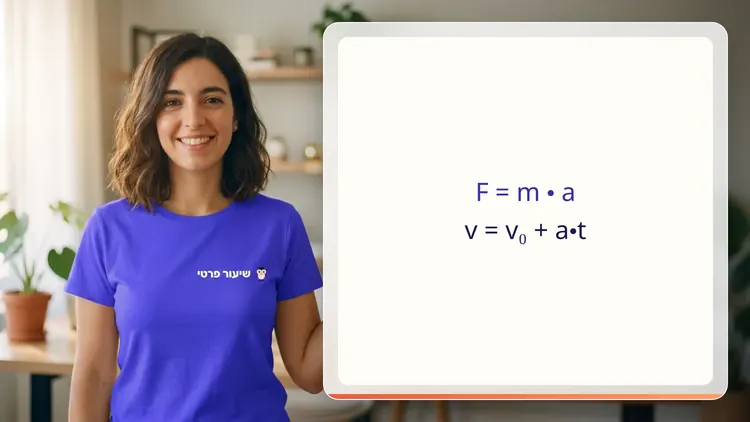
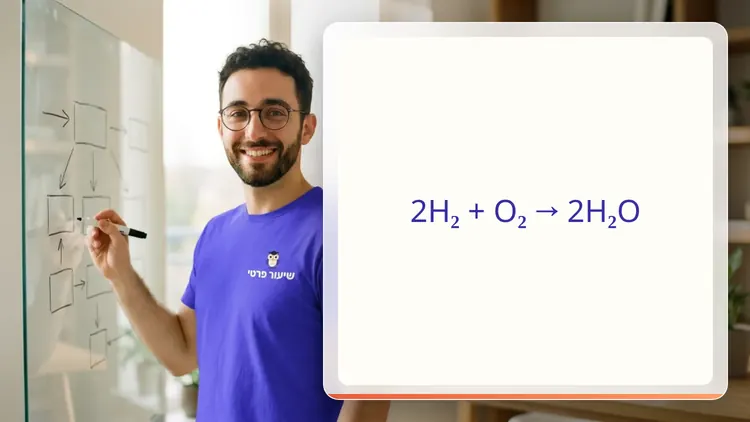
 NoaAI private tutor, in a live lesson on a shared board
A private AI teacher who teaches in a live conversation: asks, listens, draws on the board, and lets you solve it yourself with hints. Remembers what you've learned and starts each lesson where you left off.
What's a lesson like?
Your child talks with the teacher out loud, like a video call, and asks about anything unclear.
The teacher explains, writes and draws on a shared board, and your child solves along on the same board.
Snap a photo of a worksheet or homework and work through it, one problem at a time.
Parents get a report: study time, what went well and what needs more practice.
Lesson rules
- Just Learning
- Prepare, Don't Copy
FAQ
- How does a private Civil Engineering and Architecture lesson work?
- Your child picks Civil Engineering and Architecture and a topic, then talks with the teacher out loud. The teacher checks what they already know, explains in a way that suits them, writes and draws on the board, and lets them solve on their own with hints until it clicks.
- My child struggles with architectural history. Can it be learned through conversation?
- Yes, it's a great fit for conversation. The teacher puts up a picture of a building, like an International Style house in Tel Aviv, and asks the student what they notice: ribbon windows, columns, a flat roof. From there, they work out together the principles of the style and the context it came from.
- Does the teacher help with calculating loads on beams and columns?
- Definitely. The teacher sketches a ceiling resting on a beam and shows how the load travels from the floor to the beam, then to the columns and foundations. Together they practice calculating reaction forces and the maximum moment. The student traces the load path on their own and explains why a certain column carries more.
- How do I start for free?
- Sign in with Google or a code sent to your email, enter your child's name and grade, and the lesson starts right away. Every family gets 45 free lesson minutes in any subject, counted by actual lesson time, with no credit card. Then choose a paid plan and cancel anytime.
- What device do I need?
- Any computer, tablet or phone with a browser and a microphone. You can also install the site as an app on your home screen.
- Can I get help with homework and tests?
- Yes. Snap a photo of a homework page, and the teacher works through it with your child, one problem at a time. Add a test to the test calendar and get a day-by-day study plan leading up to it.
More subjects
Want to try it?
Sign in, enter your child's name and grade, and the lesson begins. 45 free lesson minutes, no credit card.
Start for freeShiur Prati with AI: what it is and how it works