Private Economics and Business Management Tutor Online with AI
Private Economics and Business Management lessons with an AI teacher: your child talks with the teacher out loud, and the teacher explains and draws on a shared board, step by step, following what they're learning in class.
Teacher: Noam
- Course updated 11/2026
- Hebrew, and 5 more languages
- 1 level: High School (Grades 10–12)
- 24 lessons · about 13 hours of lessons
Economics and Business Management
Private Economics and Business Management lessons with an AI teacher: your child talks with the teacher out loud, and the teacher explains and draws on a shared board, step by step, following what they're learning in class.
24 lessons · 6 modules · Live private lesson with the teacher on the board
What you'll learn
- Scarcity, Choice and the PPF
- Human Capital and Economic Growth
- Demand and Supply
- Inequality and Poverty
- Macro: The Keynesian Model, Imports and Exports
- Globalization and Exam Preparation
Related topics
What's included
- Live 1:1 lessons with an AI tutor on a shared board
- 13 hours of live one-on-one lessons
- 24 lessons on a shared board, each with a clear goal
- Practice and a understanding check in every lesson
- A summary after every lesson, saved in the history
- A completion certificate for each level
- Computer, tablet or phone
- Hebrew, plus 5 more languages
Course plan
1 level · 6 modules · 24 lessons · 13 hr 20 min total
בגרות 5 יח"לEconomics – Bagrut 5 Units (Questionnaire 063281)6 modules • 24 lessons • 13 hr 20 min
Mapped to exam: שאלון 063281 – כלכלה (תחום הדעת החיצוני במדעי החברה 5 יח"ל), 120 דקות, ללא חומר עזר
Scarcity, Choice and the PPF5 lessons • 2 hr 35 min
- 1Scarcity, Choice and Opportunity CostTrial lessonabout 30 min
- 2Monetary vs Opportunity Cost and Rational Choiceabout 30 min
- 3Building and Reading the PPFabout 35 min
- 4PPF Shape: Constant vs Increasing Opportunity Costabout 30 min
- 5Shifts of the PPFabout 30 min
Human Capital and Economic Growth2 lessons • 1 hr 5 min
- 6Human Capital: Investing in Educationabout 30 min
- 7Economic Growth: Sources and Measurementabout 35 min
Demand and Supply6 lessons • 3 hr 20 min
- 8Demand: The Law of Demandabout 30 min
- 9Demand Shiftersabout 35 min
- 10Supply and Its Shiftersabout 35 min
- 11Market Equilibriumabout 30 min
- 12Analyzing Changes in Equilibriumabout 35 min
- 13Government Intervention: Price Ceilings and Floorsabout 35 min
Inequality and Poverty2 lessons • 1 hr 10 min
- 14Measuring Inequality: Lorenz Curve and Giniabout 35 min
- 15Poverty: Measurement and Policyabout 35 min
Macro: The Keynesian Model, Imports and Exports5 lessons • 2 hr 45 min
- 16Macro Basics: Output and the Circular Flowabout 30 min
- 17Consumption and Saving Functionsabout 35 min
- 18Aggregate Demand and Equilibrium in a Closed Economyabout 35 min
- 19The Multiplier, Output Gaps and Fiscal Policyabout 35 min
- 20Imports and Exports in Aggregate Demandabout 30 min
Globalization and Exam Preparation4 lessons • 2 hr 25 min
- 21International Trade and Comparative Advantageabout 35 min
- 22Globalization: Features, Gains and Costsabout 35 min
- 23Exam Technique: Integration Questions and Text Analysisabout 40 min
- 24Exam Technique: Focused Questions and Final Reviewabout 35 min
What you need
- No prior knowledge needed for beginner level: the teacher checks what you already know and starts from there
- A computer, tablet or phone with a microphone, and a browser
Who it's for
- Teens and adults who want to understand the subject in depth
Exams and certifications
- בגרות 5 יח"ל: שאלון 063281 – כלכלה (תחום הדעת החיצוני במדעי החברה 5 יח"ל), 120 דקות, ללא חומר עזר
What you learn in Economics and Business Management
Taught in: High schoolBagrut: Elective · 5 unitsOfficial Bagrut Syllabus: Exam Papers, Topics & Structure
High school · Grades 10–12
- Supply and Demand
- Markets and prices
- Macroeconomics: GDP, inflation and unemployment
- Money and Banks
- Business Management and Marketing
- Basic Accounting
How we teach Economics and Business Management
Economics and Business Management is a 5-unit high school elective. Microeconomics covers supply and demand, equilibrium price, elasticity and government intervention like price ceilings and taxes. Macroeconomics gets into GDP, inflation and unemployment, money and banks, and the Bank of Israel's role in setting interest rates. On the business side, students learn management and marketing, the marketing mix and market segments. In basic accounting, they build a balance sheet and an income statement. The teacher draws every model on the board as a graph, with a downward-sloping demand curve and an upward-sloping supply curve. When something changes in the world, the student shifts the right curve. They learn to predict the outcome, not just memorize it, and to explain every shift in words.
The case: world coffee prices rose because of a drought in Brazil. What happens in Israel's tea market? The teacher draws two graphs side by side on the board, the coffee market and the tea market, and asks the student to start with coffee. The student correctly shifts the supply curve left and sees the price rise. In the tea market, they try to shift supply again. The hint: what does a consumer do when coffee gets pricier, and did anything change for tea growers? The student realizes these are substitute goods and shifts the tea demand curve right on their own. They conclude that both the price and the quantity of tea go up. Finally, they write the answer as they would on an exam. The teacher asks them to state clearly which curve moved, in which direction and why.
In economics, the usual stumbling block is telling a movement along the curve from a shift of the whole curve, and knowing which factors affect demand and which affect supply. In accounting, students mix up revenue and profit, and assets and liabilities. Parents get a summary showing which model their child practiced and whether they can now explain an outcome on their own. The teacher works through short cases from the news, and what used to be confusing starts to make sense.
More courses in this track
Physics
with Noa
Live 1:1 lesson with an AI teacherabout 15 hours24 lessonsHigh School (Grades 10–12)BagrutChemistry
with Noam
Live 1:1 lesson with an AI teacherabout 14 hours23 lessonsHigh School (Grades 10–12)BagrutBiology
with Noa
Live 1:1 lesson with an AI teacherabout 15 hours24 lessonsHigh School (Grades 10–12)Bagrut
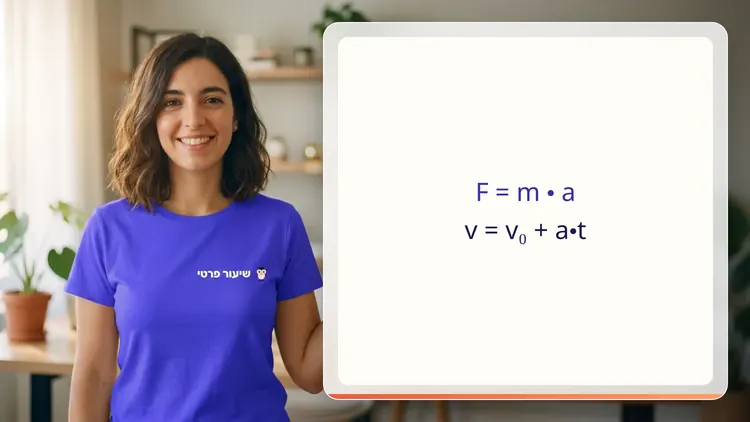
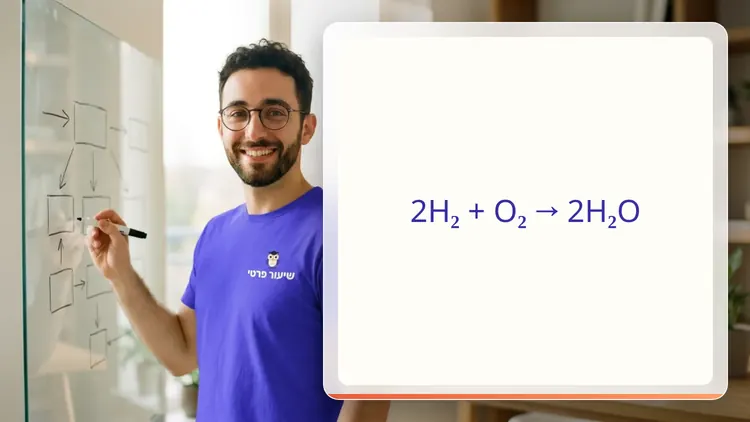
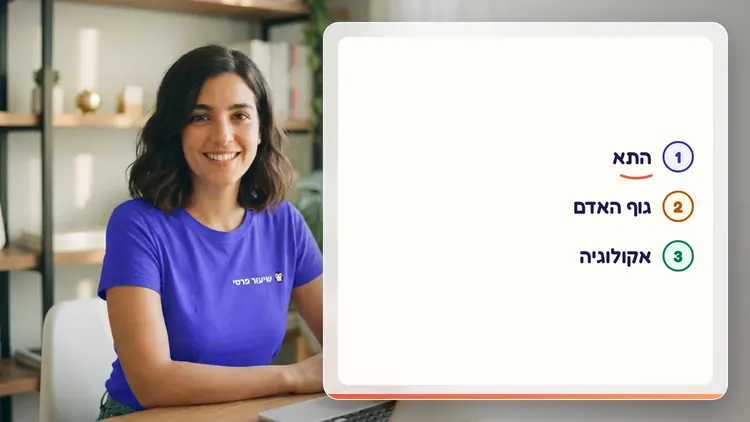
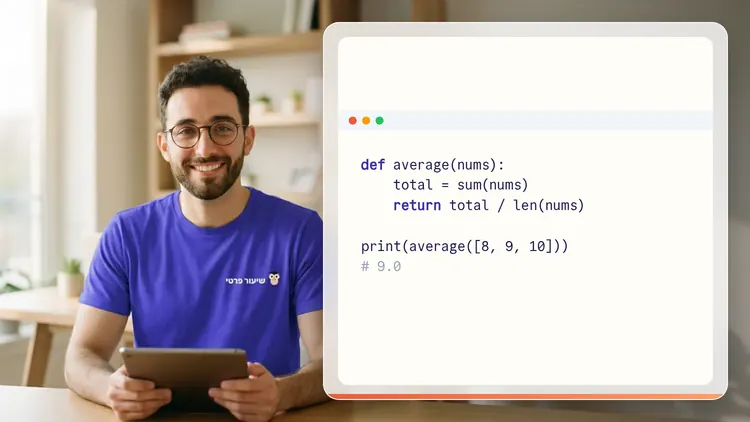
Your teacher
 NoamAI private tutor, in a live lesson on a shared board
A private AI teacher who teaches in a live conversation: asks, listens, draws on the board, and lets you solve it yourself with hints. Remembers what you've learned and starts each lesson where you left off.
What's a lesson like?
Your child talks with the teacher out loud, like a video call, and asks about anything unclear.
The teacher explains, writes and draws on a shared board, and your child solves along on the same board.
Snap a photo of a worksheet or homework and work through it, one problem at a time.
Parents get a report: study time, what went well and what needs more practice.
Lesson rules
- Just Learning
- Prepare, Don't Copy
- General knowledge, not personal advice
FAQ
- How does a private Economics and Business Management lesson work?
- Your child picks Economics and Business Management and a topic, then talks with the teacher out loud. The teacher checks what they already know, explains in a way that suits them, writes and draws on the board, and lets them solve on their own with hints until it clicks.
- My child confuses a change in demand with a change in quantity demanded. Can you help?
- Yes. The teacher draws a demand curve and shows that a change in the product's own price moves a point along the curve, while a change in income, tastes or the price of another product shifts the whole curve. The student gets a list of cases and sorts each one on their own, then explains each choice.
- Does the lesson also help with basic accounting and building a balance sheet?
- Absolutely. The teacher writes a small business's transactions on the board, like buying stock on credit or taking a bank loan, and the student records each one on the assets side or the liabilities and equity side. At the end, they check that the balance sheet balances and understand what every line means.
- How do I start for free?
- Sign in with Google or a code sent to your email, enter your child's name and grade, and the lesson starts right away. Every family gets 45 free lesson minutes in any subject, counted by actual lesson time, with no credit card. Then choose a paid plan and cancel anytime.
- What device do I need?
- Any computer, tablet or phone with a browser and a microphone. You can also install the site as an app on your home screen.
- Can I get help with homework and tests?
- Yes. Snap a photo of a homework page, and the teacher works through it with your child, one problem at a time. Add a test to the test calendar and get a day-by-day study plan leading up to it.
More subjects
Want to try it?
Sign in, enter your child's name and grade, and the lesson begins. 45 free lesson minutes, no credit card.
Start for freeShiur Prati with AI: what it is and how it works